
“Being authentic!” vs. “Being authentic.”

Authenticity.
Something this generation holds dear.
How “real” or “fake” you are is a big part of today’s social climate.
But for a lot of people, that “authenticity” shows in how unapologetic and unfiltered you can act.
Saying whatever’s on your mind (regardless of the people you’re with, regardless of the setting you’re in, and regardless of the read on the room) is championed. Valued.
“Authentic” and “Unfiltered” have a hazy, indistinct line between them. As I see now, this line has been crossed. Disregarded. Maybe never even seen in the first place.
Being so unapologetic and blunt that you shamelessly ignore the concept of accountability is something I will never find “authentic.” If anything, I think these people try way too hard to be edgy and rebellious.
Yes, to be authentic means to not always conform to societal norms. But that doesn’t mean outright rejecting society like some poser.
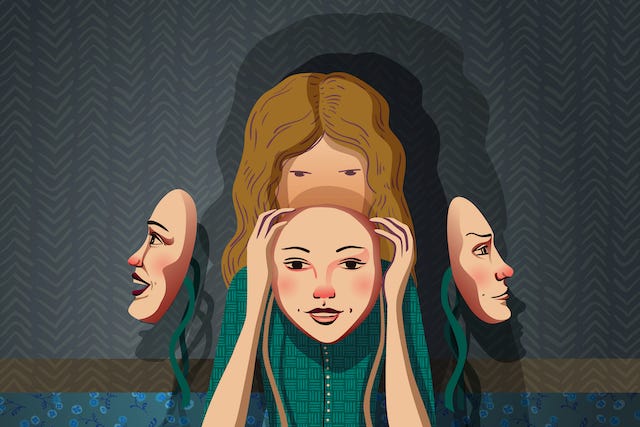
“Authenticity is not the rejection of ‘social masks,’ but the ability to distinguish the mask from the face beneath it.”
-Carl Jung
The biggest myth and stigma around authenticity is that it means saying whatever comes to mind without a filter.
But often times, using this clause as a reason to speak without considering the impact their words have on others is just a lack of emotional regulation.
I have seen countless examples of the “edgy and authentic” character trope throughout my wonderful high school experience, and they annoy me every time.
And the funniest part, the paradox of it all?
Despite their vain efforts to seem unique and rebellious, and despite their efforts to stand out and scream for the center of attention, they’re all the same.
They all fall under the same categories: Loud, easily angered, and unbearably cringe.
And the truth is, if you’re willing to prod for long enough, they’re not anywhere as tough or resilient as they want you to believe.
Although that should’ve been obvious from how easily you can anger them.
These people are often aimless, jaded, and ambitionless. They want to bring the people around them to their level.
If you watch them and really listen to how they talk, you’ll start to notice a pattern:
They’re always so negative.
You’ll hear it when ambition is brought up, whenever the future or goals are discussed:
“Life doesn’t work that way.”
“I gave up on that a long time ago.”
“You’re better off [insert some draining future with no chance for upward mobility].”
These are actual quotes from people I’ve met.
People who also believe that their suffering is the priority. They believe that their traumas and anecdotes are more important than those around them.
That the people around them “don’t understand,” and are “too soft.”
So they make it a point to bring a personal anecdote, usually negative, to every discussion topic.
All of this under the clause of “brutal honesty.”
There comes a point where the “brutal” part becomes more prominent than the “honesty” part.
A point where what you’re saying is more harmful than helpful.
And I wouldn’t even be as mad if they could take what they give.
But the truth is, the moment they face some brutal honesty, they can’t handle it.
That’s when they play the victim. Instead of owning up to their faults, like they tell everyone around them to do.
“It’s not my fault I’m this way.”
“I don’t know how to handle life. Nobody does.”
“It’s because I’m [insert some mental disease, likely self-diagnosed].”
But, what happened all of a sudden? Where did the “brutal honesty” and “own up to your actions” go?
The truth is, they aren’t authentic either.
Which is fine, don’t get me wrong.
What isn’t fine is that they aren’t willing to admit it. They’re fully convinced that they wear their heart on their sleeve, and that their “real self” is on full display for the world to see.
So, how do we go from “Being authentic!” to “Being authentic.”
Ok, I don’t know if I should’ve put a question mark, but you probably know it was a question. My bad 😓
But anyway, it’s simple:
1. Think before you speak.
The wrong words in a moment can be as painful as arrows. Even if you try to take them back, you can’t reverse the wound they leave in the people they’re directed to.
You could ruin a connection with what you say. Destroy a friendship.
This doesn’t mean being afraid of harsh honesty completely.
Sometimes, you need to be harsh, to stand your ground.
The problem comes when you are more harsh than honest.
2. Be at peace with social expectations
Societal norms are there for a reason.
So stop being so adamant and defying everything because you’re so anti-society.
It’s fine to dislike certain aspects of society, but to dislike everything about it solely for the pursuit of an “authentic” look isn’t authenticity.
Being at peace with society shows more authenticity to others, and you’ll feel it in yourself as you ↓
3. Be at peace with yourself
I can’t recall if I touched upon this earlier.
But often, the people I’m talking about struggle with themselves.
As much as they like to make it seem that they’re this strong, independent rebel, they’re struggling with their self-esteem, questioning if they even can feel empathy or think about others.
How do I know? Because I used to act exactly like this.
Why else would I bear so much resentment towards them? They remind me of…me.
But yeah, they usually don’t realize that the more they begin to “accept” this lack of self-esteem and begin to use brashness as a coping mechanism, the more they push people away from them.
And humans are social creatures. Unless you have people around you, you’ll never be at peace with yourself.
That’s what I had to realize. In order to be authentic, you have to be at peace with yourself.
Not happy with who you are, with all your flaws or whatever.
But at peace with yourself, but always reinventing yourself.
You’re always in motion, but you choose whether that’s forward or backward.
very interesting and real read. def got me thinking. "unfiltered" people who i've encountered are also always the most hurt. they hide behind hot takes and acting sometimes abrasive to distract from the fact that they aren't at peace with who they are but are also unwilling to change it. it's a type of defense mechanism that strangely enough bypasses human decency sometimes. weird that they're always trying to get their opinions out there but will never be heard because of it.